 sales@dasinfomedia.com


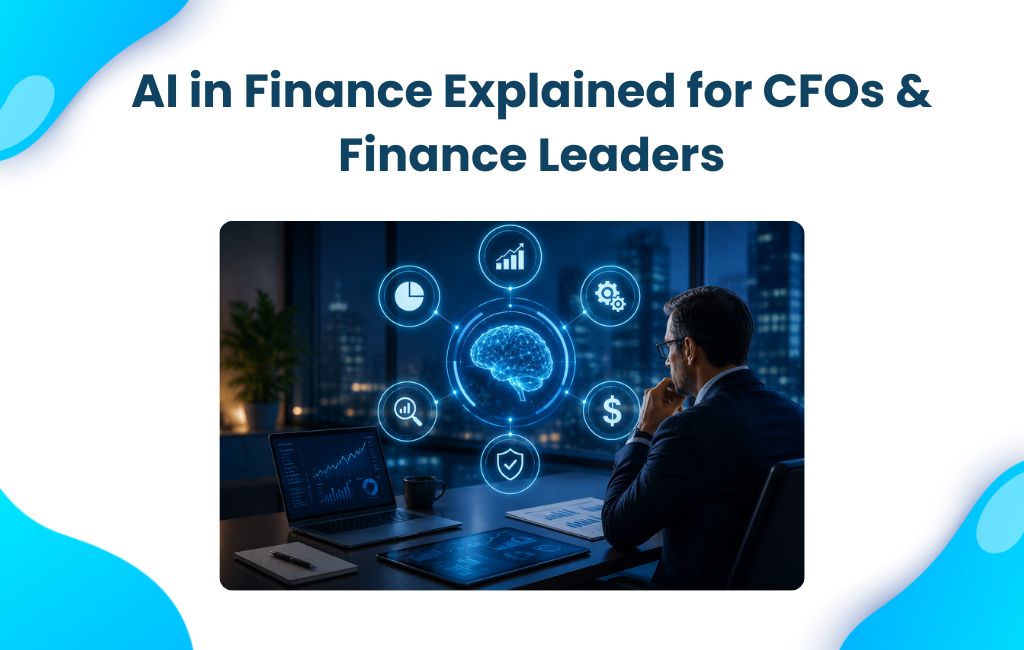
There’s a strange thing happening with AI in finance right now.
In headlines and keynote presentations, AI is supposedly replacing analysts, writing earnings reports, and reinventing Wall Street overnight. But inside real finance teams-banks, insurers, advisory firms, FP&A departments, and corporate finance groups-the reality is far less dramatic.
And far more useful.
The most valuable AI systems today are not making billion-dollar investment decisions independently. They’re doing the work finance professionals quietly spend hours on every week:
- Reading lengthy reports
- Drafting repetitive documents
- Extracting data from PDFs
- Summarizing meetings
- Organizing financial information
That may sound unexciting. But for finance leaders, it matters.
Because saving a senior team five hours a week on repetitive work is often more valuable than chasing futuristic automation promises that never leave a demo environment.
If you’re trying to understand AI in finance without the jargon, this guide is for you. We’ll skip the hype, avoid technical buzzwords, and focus on what AI is genuinely doing inside finance teams today and where it still falls short.
What “AI” Actually Means in Finance Today
When most finance leaders hear “AI,” they imagine a broad category of futuristic technology.
In practice, the current conversation is mostly about one thing:
Large Language Models (LLMs):
These are systems like:
The easiest way to think about them is this:
They are extremely fast readers and writers.
They take in large amounts of text – earnings reports, policy documents, underwriting files, spreadsheets, emails, contracts, meeting transcripts – and produce structured responses.
That response may include:
- A summary
- A draft memo
- Extracted financial data
- A risk overview
- A comparison between documents
- Suggested narrative commentary
This matters because finance is fundamentally a profession built around reading, reviewing, interpreting, and communicating information.
AI is becoming useful precisely because it fits naturally into that environment.
Three Things AI Is Genuinely Good at Today
1. Reading Large Documents Quickly
Finance teams deal with enormous volumes of documentation:
- 10-K filings
- Loan agreements
- Insurance policies
- Audit documentation
- Investment memos
- Claims files
AI tools can process these documents in seconds and generate concise summaries with references back to source material.
For example: An underwriter reviewing a 200-page policy package can ask AI to identify exclusions, summarize risk factors, or highlight changes between versions. An FP&A team can summarize quarterly operating reports across multiple business units before leadership meetings.
The Key Point: The best-performing finance teams use AI as the first reader, not the final authority.Humans still validate the outcome. But the time saved on initial review can be significant.
2. Drafting Structured Financial Content
One of the biggest productivity gains in finance comes from eliminating the “blank page” problem.
AI is particularly effective at drafting:
- Investment committee memos
- Variance commentary
- Audit narratives
- Credit summaries
- Due diligence notes
- Internal reporting updates
- Meeting recaps
Instead of starting from scratch, finance professionals now begin with a workable first draft.
That changes the workflow dramatically:
Before:
- Human writes → edits → finalizes
Now:
- AI drafts → human reviews → human finalizes
Most teams adopting AI effectively are seeing meaningful reductions in time spent on first drafts – especially for repeatable reporting formats.
And importantly, the human still owns the judgment.
3. Extracting Structured Data from Unstructured Documents
This is one of the least glamorous – and most commercially valuable – use cases in finance.
Many finance workflows still involve people manually retyping information from documents like:
- Bank statements
- Vendor invoices
- Claims forms
- K-1s
- Tax documents
- Loan applications
Modern AI systems can now extract structured fields automatically and flag uncertain entries for review.
That changes the economics of operational work. Instead of manually reviewing 100% of records, teams may only need to validate exceptions or low-confidence extractions.
For finance operations, accounting, insurance processing, and advisory firms, this is where some of the clearest ROI exists today.
A Simple Framework for Finance Teams
If you’re evaluating AI internally, start with one workflow and ask three questions:
1. How many hours does this consume monthly?
High-volume repetitive work is usually the strongest starting point.
2. What’s the cost of a small error?
If errors are manageable with human review, AI may be a strong fit.
3. Can the data remain secure?
Sensitive financial data requires proper governance, privacy controls, and vendor review before deployment.
If a workflow scores well across these three questions, it’s likely worth exploring further. That’s a far more practical approach than chasing broad “digital transformation” narratives.
The Bigger Shift Happening in Finance
The most important thing about AI in finance is not that it replaces expertise.It’s that it changes where expertise gets applied.
Many finance workflows still involve people manually retyping information from documents like:
- formatting,
- rewriting,
- summarizing,
- and manually extracting data
and more time:
- Reviewing judgment calls,
- interpreting risk
- advising stakeholders,
- and making decisions.
That’s the real transition already underway. Not replacement. Redistribution of cognitive workload.
Where Finance Leaders Should Go Next
The smartest finance teams right now are not trying to automate everything.
They’re identifying:
- repetitive document-heavy workflows,
- low-risk operational bottlenecks,
- and areas where humans lose time on mechanical work.
That’s where AI is creating measurable value today.
Educational / Vendor-Neutral Resources
Excellent technical-but-practical examples for finance workflows.
Related Blogs




 +1 813 467 8539
 sales@dasinfomedia.com