 sales@dasinfomedia.com


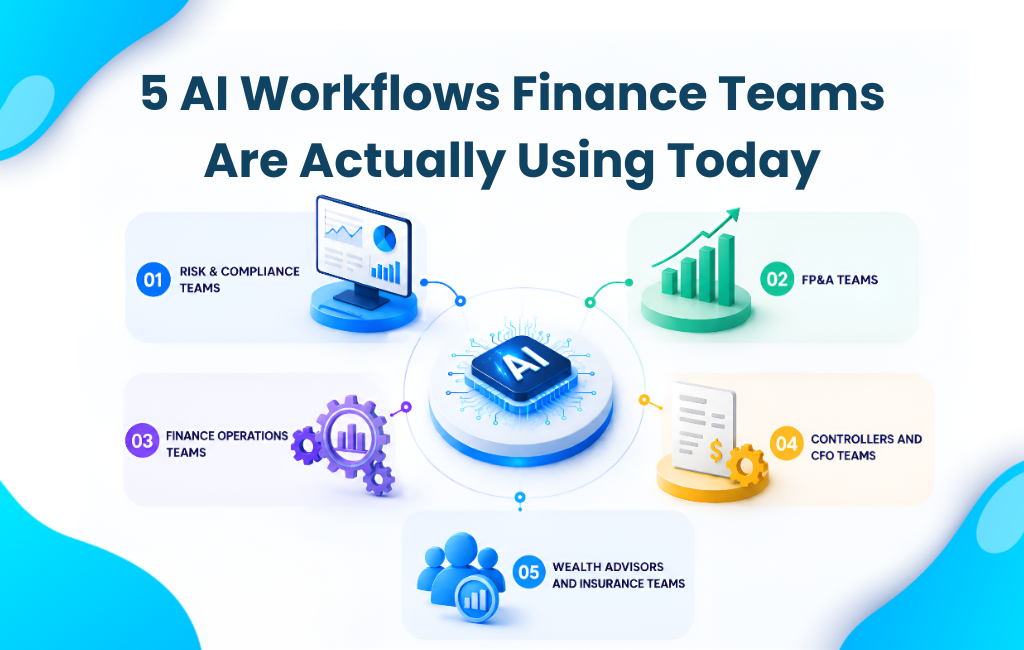
But the biggest value today is much more practical.
Finance Teams across the U.S. are using AI to Reduce Repetitive Work, Speed Up Reporting Cycles, and Spend Less time buried in Documents and Admin Tasks.
Here are Five AI Workflows already Helping Finance Professionals save Meaningful hours every week.
1. Risk & Compliance Teams: Reviewing Financial Documents Faster
Risk and Compliance Teams Spend a huge Amount of Time Reviewing:
- Audit Reports
- Loan Agreements
- Insurance Policies
- Regulatory Filings
AI Tools can Quickly Summarize Long Documents, Flag Potential Risks and Highlight the Sections that matter most.
Real-world example:
An FP&A Manager can use AI to draft month-over-month expense variance commentary before leadership review
Where Human Review Still Matters
Finance leaders still validate accuracy, business context, and messaging.
2.FP&A Teams: Drafting Financial Reports and Variance Commentary
FP&A teams constantly prepare:
- Board Updates
- Monthly Reporting Packages
- Variance Explanations
- Executive Summaries
AI can generate first drafts using reporting data and prior commentary, helping teams move faster during close cycles.
Real-world example:
A Risk Manager at an insurance or banking firm can use AI to identify policy exclusions or unusual clauses before final review.
Where Human Review Still Matters
AI helps accelerate the first pass, but experienced professionals still make the final call.
3. Finance Operations Teams: Automating Data Extraction
Finance operations teams still spend hours manually processing:
- Invoices
- Bank Statements
- Tax Documents
- Onboarding Forms
AI-powered tools can automatically extract structured data and reduce manual entry work.
Real-world example:
A Finance Operations Manager can automate invoice processing and reduce the amount of manual review required from AP staff.
Where Human Review Still Matters
Teams still review exceptions, missing data, and unusual entries.
4. Controllers and CFO Teams: Speeding Up Month-End Close
Month-end reporting often requires teams to explain:
- Revenue Fluctuations
- Rising Expenses
- Forecast Variances
AI can analyze Transaction Data and Generate First-Pass Financial Explanations Automatically.
Real-world example:
A Corporate Controller can use AI to draft explanations for unexpected expense increases during the monthly close process.
Where Human Review Still Matters
Final reporting and auditor-facing documentation still require leadership oversight.
5. Wealth Advisors and Insurance Teams: Summarizing Client Conversations
Financial Advisors and Insurance Teams spend Significant Time Documenting:
- Client Meetings
- Portfolio Reviews
- Underwriting Calls
- Claims Discussions
AI Tools can Transcribe Conversations, Summarize Key Points and Draft Follow-up notes Automatically.
Real-world example:
A Wealth Advisor can generate client meeting summaries and follow-up action items immediately after a portfolio review meeting.
Where Human Review Still Matters
Any client-facing communication still needs approval before being shared externally.
The Real Opportunity With AI in Finance
The Finance Teams seeing the most success with AI are not trying to replace people.
They’re using AI to reduce repetitive operational work so experienced professionals can spend more time on:
- Analysis
- Strategic Decisions
- Client Relationships
- Risk Management
That’s where AI is creating measurable value in finance today.
Related Blogs




 +1 813 467 8539
 sales@dasinfomedia.com