 sales@dasinfomedia.com


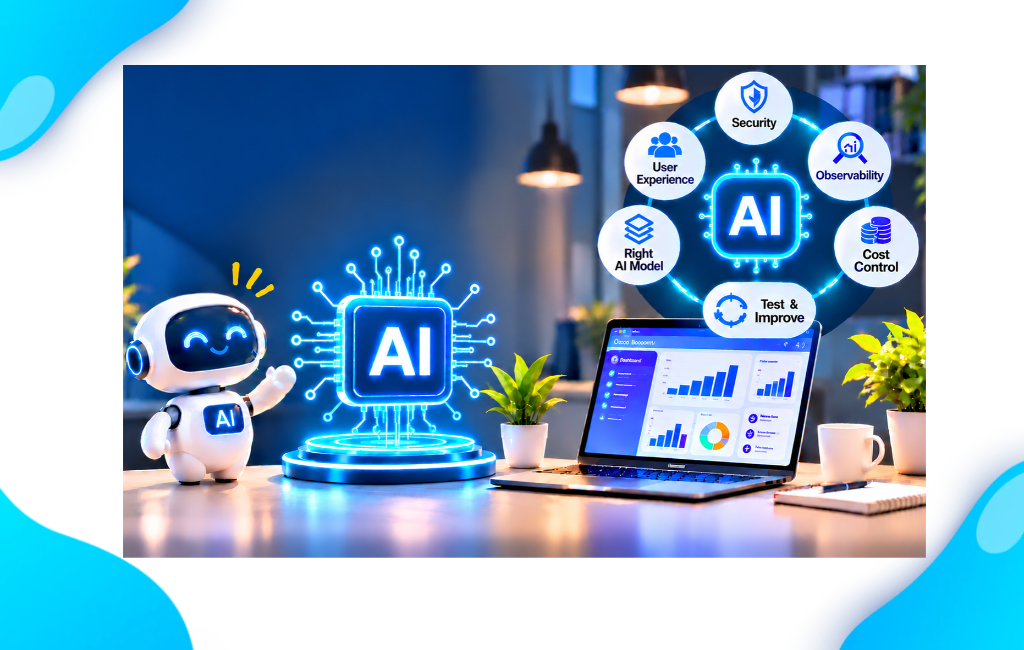
But adding AI does not automatically make a product better.
Some AI features solve real problems and keep users engaged. Others create confusion, increase costs, or produce unreliable results.
The difference comes down to how AI is designed, integrated, secured, and monitored.
What Works When Adding AI to a Product?
1. Solve a Real User Problem
Start with a problem your users actually face. Use AI when it makes a task easier, faster, or more accurate.
For example, an AI assistant that helps customers find information quickly is more useful than a chatbot that simply adds another conversation window.
2. Spatial Intelligence: AI That Understands Space
Users should not need technical knowledge to use AI features.
Provide clear results, simple interactions, and options to review or correct AI-generated information.
3. Choose the Right AI Model
Different tasks require different AI capabilities. Choose models based on accuracy, speed, cost, and the complexity of the task.
4. Build Security into Your AI Product
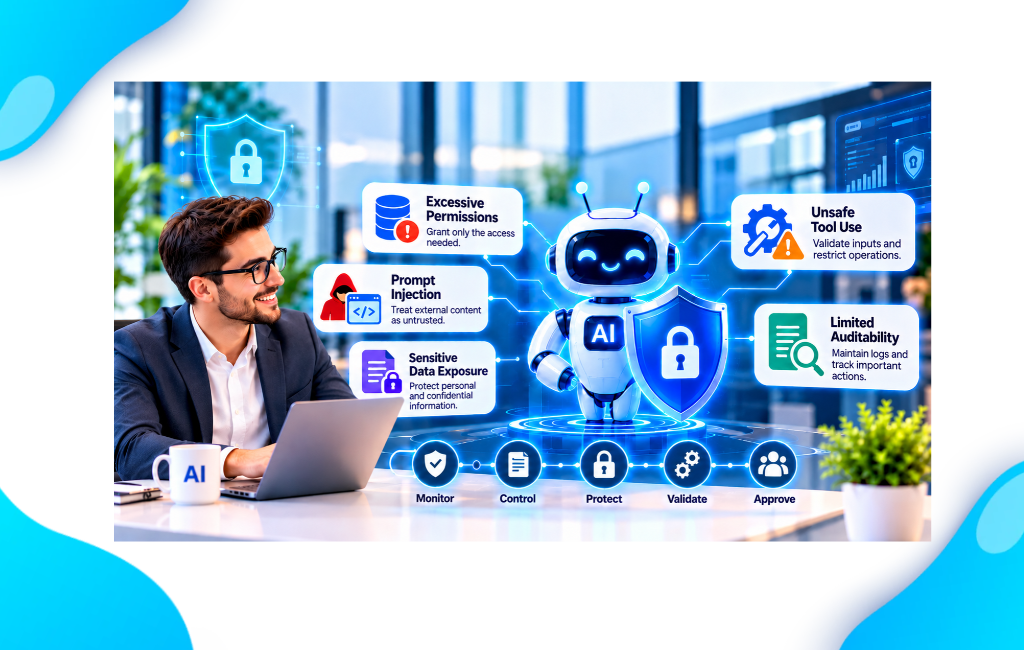
AI applications may access customer information, business documents, databases, and connected software systems. Security should be considered from the beginning.
Important practices include: Protecting sensitive data and API credentials. Applying role-based access permissions. Preventing unauthorized agent actions. Securing APIs and third-party integrations. Requiring human approval for sensitive operations
A useful AI product must also be a secure and trustworthy product.
5. Use AI Observability to Monitor Performance
AI observability helps businesses understand what their AI systems are doing and whether they are performing correctly.
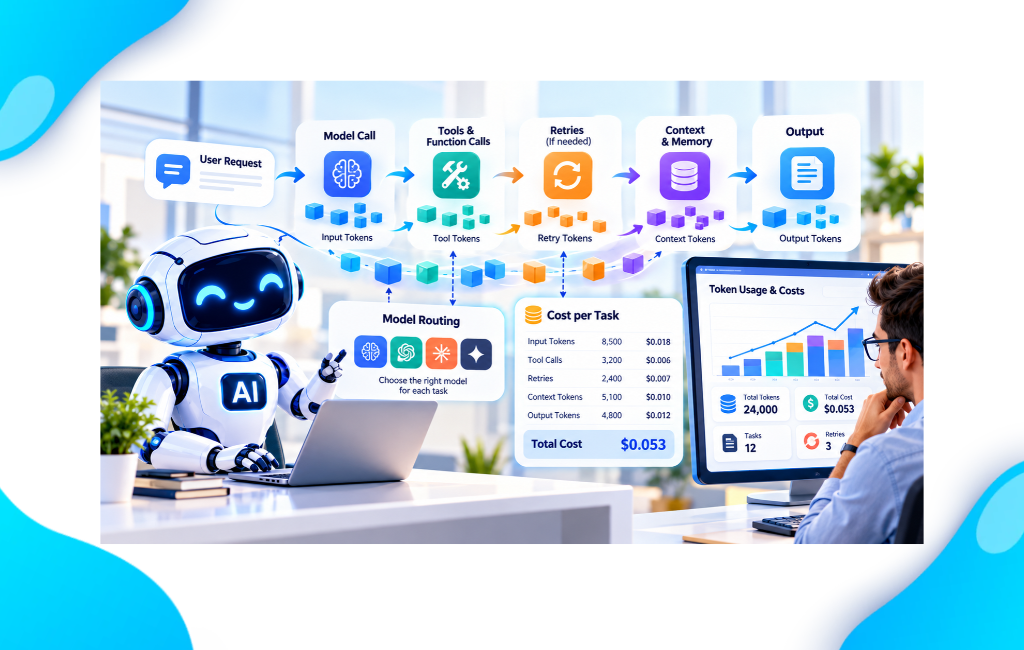
Businesses should monitor usage, optimize prompts, select cost-effective models, and avoid unnecessary AI requests. The goal is to deliver useful AI capabilities without making the product too expensive to operate.
It provides visibility into: AI model requests and responses. Agent activities and tool usage.Errors and failed workflows. Response time and output quality. Token consumption and AI costs. Unusual behavior and performance changes.
Without observability, problems such as incorrect responses, repeated agent actions, and increasing AI costs can go unnoticed.
6. Control AI Usage and Operating Costs
AI models can generate costs based on token consumption, API requests, and infrastructure usage.
It provides visibility into: AI model requests and responses. Agent activities and tool usage.Errors and failed workflows. Response time and output quality. Token consumption and AI costs. Unusual behavior and performance changes.
Without observability, problems such as incorrect responses, repeated agent actions, and increasing AI costs can go unnoticed.
7. Keep Testing and Improving
AI performance can change as models, data, and user requirements evolve.
Collect user feedback, evaluate output quality, monitor security, and regularly improve AI features.
What Doesn’t Work? Common AI Product Mistakes
Adding AI just for marketing: Features without real user value rarely create lasting engagement. Trusting every AI response: AI can generate incorrect information and requires appropriate validation. Ignoring security: Poor access controls can expose sensitive information. Skipping observability: Without monitoring, errors, unusual behavior, and excessive token usage may go unnoticed. Making products complicated: Too many AI features can confuse users. Ignoring AI costs: Uncontrolled model usage can increase operating expenses. Removing human control: Important decisions should have appropriate review and approval.
How to Make AI Integration Successful
Before adding AI to your product, ask these questions:
- What user problem will AI solve?
- Will it make the product easier to use?
- Is the AI output reliable?
- Is user data properly protected?
- Can we monitor agent behavior and performance?
- Can we control token usage and operating costs?
- How will we measure success?
Start with one useful AI feature, test it with real users, monitor its performance, and improve it before expanding.
Adding AI to a product is not about having the latest technology. It is about making the product more useful, reliable, and secure.
Successful AI products combine five important elements: user experience, intelligent functionality, security, observability, and cost efficiency.
AI can make products smarter, but proper monitoring and security make them dependable.
The best AI products don’t just use AI. They use AI responsibly to solve problems that matter.
Related Blogs



 +1 813 467 8539
 sales@dasinfomedia.com
