 sales@dasinfomedia.com


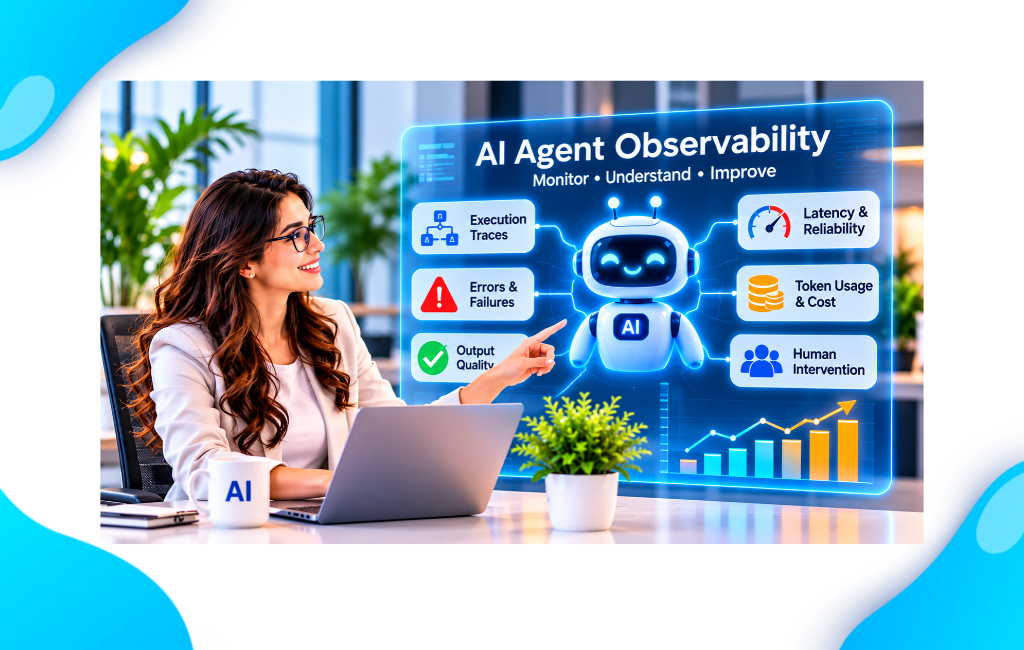
AI agent observability is the ability to understand how an AI agent operates by examining its execution steps, model interactions, tool calls, errors, and results.
Traditional application monitoring can show whether a system is available or responding slowly. AI agents require additional visibility because a workflow can run successfully from a technical perspective while producing an incorrect or incomplete result.
Observability helps teams investigate not only whether an agent ran, but also what happened during execution.
Why Is Monitoring One AI Agent Different from Monitoring Multiple Agents?
A multi-agent system may include a coordinator, specialist agents, external APIs, databases, and business applications. Each component can introduce a different failure point.
For example, a research agent might collect incorrect information, an analysis agent might interpret it poorly, or a final agent might send an incomplete result to another system.
Without end-to-end visibility, identifying the source of the problem can be difficult.
What Should AI Agent Observability Track?
- Execution Traces: Record the sequence of relevant steps, including model requests, tool calls, responses, and handoffs between agents.
- Errors and Failed Actions: Track API failures, timeouts, invalid inputs, unsuccessful retries, and incomplete workflows.
- Output Quality: Evaluate whether the agent completed the intended task correctly and followed the required instructions.
- Latency and Reliability: Measure response time, task duration, completion rates, and the frequency of failures.
- Token Usage and Cost: Track input and output tokens, model usage, and estimated cost by agent, workflow, or business task.
- Human Intervention: Record when an agent requires approval, escalates an issue, or hands work to a human
How Does Observability Help Troubleshoot AI Agents?
Imagine a business agent that takes too long to process customer requests. Observability may reveal that the agent is repeatedly querying a database, sending excessive context to a model, or retrying an unsuccessful API call.
Each problem requires a different solution. More computing capacity will not necessarily fix an inefficient workflow or an incorrect tool configuration.
Detailed traces can help teams isolate the cause and measure whether a change improves the result.
Why Token Monitoring Belongs in Observability
An agent may complete a task successfully but use far more tokens than expected. If this happens across thousands of executions, the cost can become significant.
Monitoring token usage alongside successful outcomes helps teams identify inefficient agents and understand the cost of delivering useful results.
The Future of AI Agent Monitoring
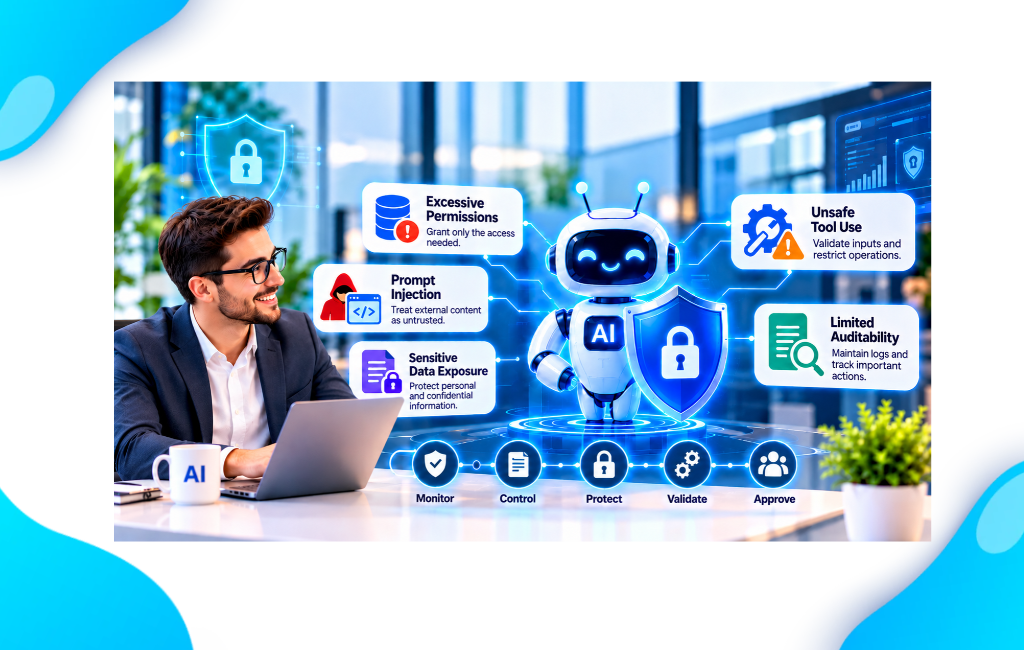
As organizations adopt more agents, observability is likely to become an important part of AI operations. Effective monitoring should combine technical metrics with business outcomes, quality evaluations, security events, and cost information.
Related reading: What Is AgentOps? Managing AI Agents After Deployment.
Related Blogs


 +1 813 467 8539
 sales@dasinfomedia.com
