 sales@dasinfomedia.com


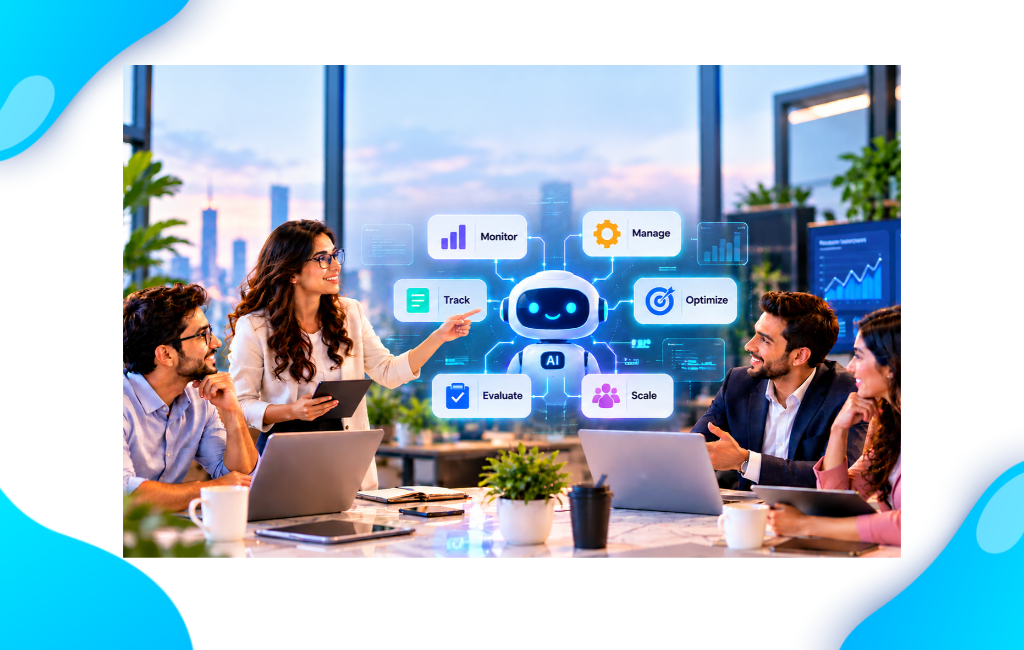
AgentOps is the set of practices and tools used to deploy, monitor, evaluate, secure, and maintain AI agents throughout their operational lifecycle.
Building an AI agent is only one part of the process. Once it interacts with real users, data, and business applications, organizations must ensure that it continues to perform as expected.
This is why AI agent management is becoming an important consideration as companies move from AI experiments to production workflows.
Why Do AI Agents Need Ongoing Management?
AI agents can behave differently as models, instructions, data, and connected applications change. They can also encounter unexpected requests, failed API calls, incomplete information, or repetitive execution loops.
Without appropriate controls, these issues can lead to unreliable results, unnecessary costs, or inappropriate actions.
AgentOps provides a structured approach to identifying and managing such problems.
The Core Components of AgentOps
1. Deployment and Version Control: Teams need to know which agent version, model, instructions, and tools are active. Changes should be documented and tested before being introduced into important workflows.
2. Evaluation and Performance Monitoring: Agents should be evaluated against representative tasks. Useful measures include task completion, accuracy, policy compliance, latency, and escalation rates.
3. Observability and Incident Management: Execution traces and error records help teams investigate failures, understand tool usage, and determine where a workflow stopped working.
4. Security and Governance: Permissions, approved actions, audit trails, and human review help keep agents within defined boundaries.
5. Cost Management: Token consumption, model usage, repeated calls, and cost per successful task should be tracked to understand whether an agent is economically useful.
Is AgentOps the Same as DevOps or MLOps?
AgentOps overlaps with DevOps and MLOps but addresses additional challenges created by agents that reason, use tools, and execute multi-step tasks.
DevOps focuses on delivering and operating software. MLOps manages machine learning systems and their lifecycle. AgentOps adds operational attention to agent execution, tool interactions, behavioral evaluation, permissions, and task-level outcomes.
The boundaries are not universally standardized, and organizations may combine these practices within existing teams.
When Does AgentOps Become Important?
AgentOps becomes especially relevant when agents are used repeatedly in business-critical processes, connect to sensitive systems, collaborate with other agents, or generate meaningful operating costs.
A small experimental assistant may need only basic monitoring. A network of agents handling customer records, finance workflows, or IT operations requires stronger controls.
Reliable AI agents need ongoing operational ownership. AgentOps helps organizations move from isolated demonstrations toward monitored, evaluated, and accountable AI systems.
Related Blogs


 +1 813 467 8539
 sales@dasinfomedia.com
