 sales@dasinfomedia.com


AI is moving beyond chatbots and basic automation. Businesses are adopting AI agents that can perform tasks, connect applications, analyze information, and manage workflows.
This shift is changing how organizations operate.
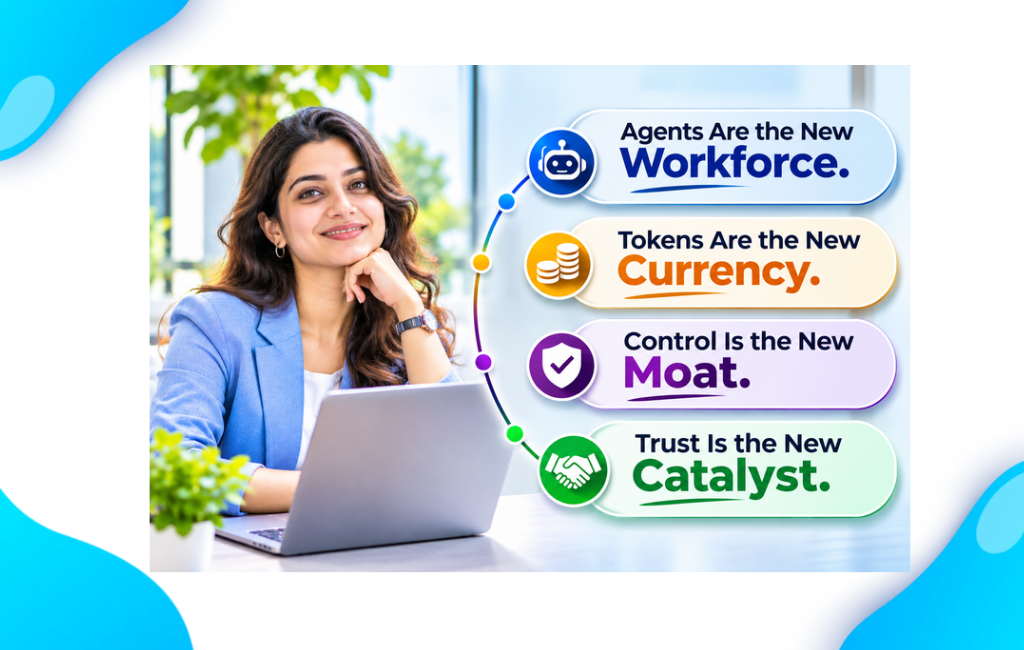
Four important ideas define this new era:
- Agents are the new workforce.
- Tokens are the new currency.
- Control is the new moat.
- Trust is the new catalyst
What Works When Adding AI to a Product?
1. Agents Are the New Workforce
- AI agents are becoming digital workers that can handle tasks with varying levels of autonomy.
- Businesses can use agents for sales, customer support, finance, marketing, IT operations, and reporting.
- Multiple agents can also work together, sharing information and completing connected tasks.
- Just like human employees, AI agents need clear responsibilities, permissions, monitoring, and supervision.
- The future workplace will increasingly combine human expertise with AI-powered digital workers.
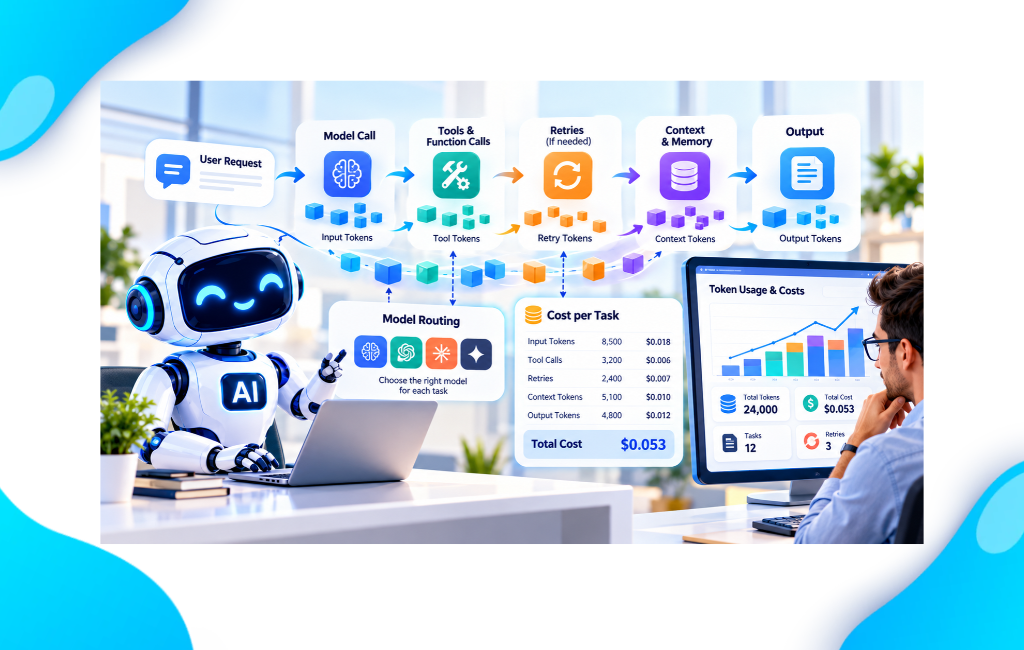
2. Tokens Are the New Currency
AI models consume tokens when processing information and generating responses. As businesses use more AI agents, token consumption and model costs can increase.
Businesses need to monitor:
- Token usage by agent and workflow.
- AI model costs.
- Unnecessary requests and repeated tasks.
- Model selection and routing.
- Opportunities for caching and optimization.
The goal is to get better results while keeping AI operating costs under control.
3. Control Is the New Moat
As AI agents access more business applications and data, controlling their activities becomes essential.
Businesses need three important layers:
- Connectivity: Connect AI agents with applications, APIs, databases, and other agents.
- Security: Protect sensitive data, manage permissions, and prevent unauthorized actions.
- Observability: Monitor agent activities, performance, errors, token consumption, and unusual behavior.
Together, these three layers help businesses build reliable and manageable AI environments.
4. Trust Is the New Catalyst
AI adoption depends on trust.
Businesses and customers need confidence that AI systems protect information, provide reliable results, and operate within defined boundaries.
Building trust requires data protection, continuous testing, transparent AI behavior, human oversight, and clear accountability.
AI should not just be intelligent. It should be dependable
Important practices include:
 Protecting sensitive data and API credentials.
Applying role-based access permissions.
Preventing unauthorized agent actions.
Securing APIs and third-party integrations.
Requiring human approval for sensitive operations
A useful AI product must also be a secure and trustworthy product.
What This Means for Businesses
Businesses that successfully combine these elements can build stronger foundations for AI adoption and intelligent operations.
| AI transformation | Business priority |
|---|---|
| AI agents | Workforce automation |
| Token economics | Cost optimization |
| Control | Security and observability |
| Trust | Governance and reliability |
The future of business will not be defined simply by how many AI agents an organization deploys.
It will depend on how effectively those agents work, how efficiently they use resources, how securely they operate, and how much people trust them.
Agents are the new workforce. Tokens are the new currency. Control is the new moat. Trust is the new catalyst.
These are the foundations of the next generation of intelligent businesses.
Related Blogs

 +1 813 467 8539
 sales@dasinfomedia.com
